
Meet Nadia
(she/her/ella)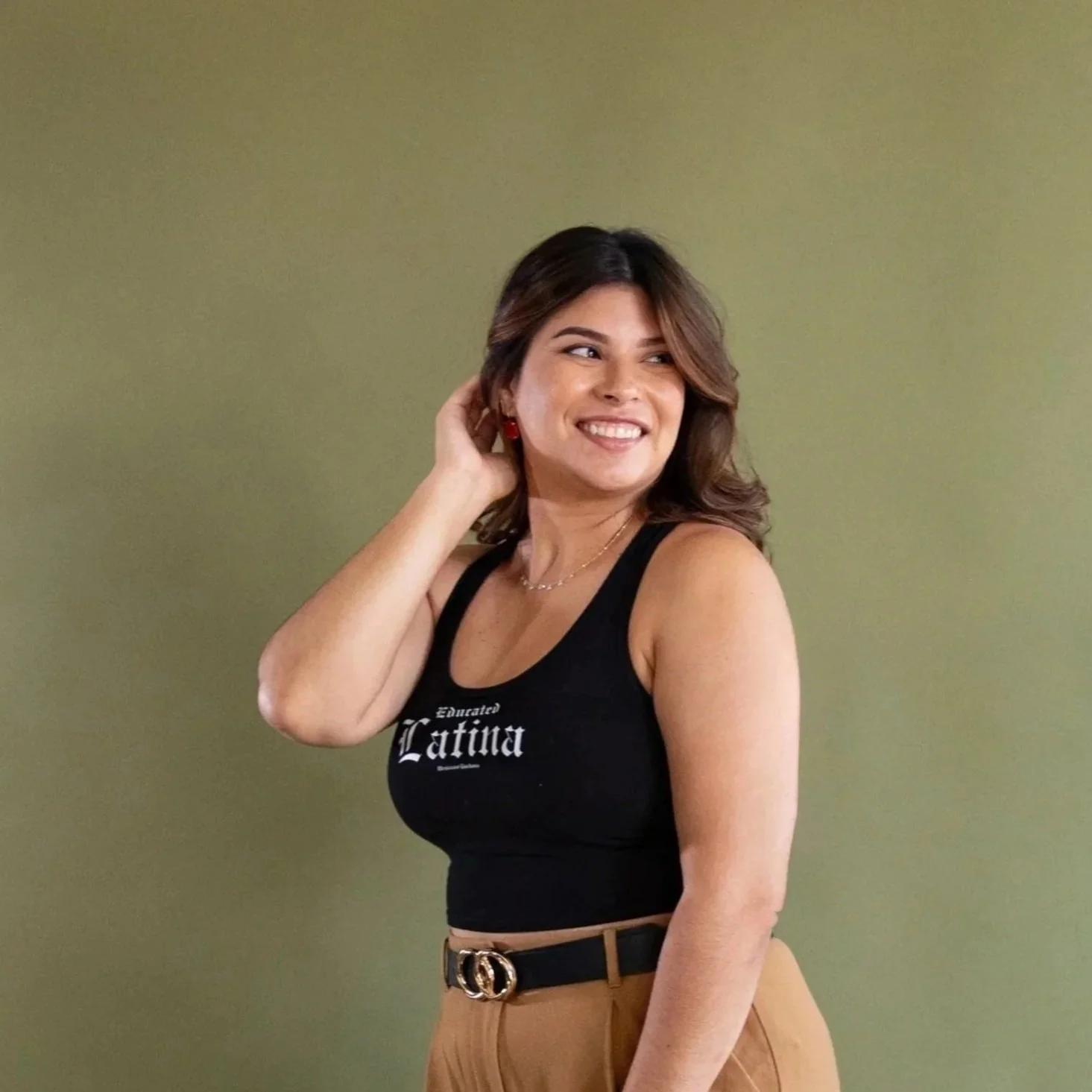
-
Hola! I’m so happy you’re here.
I’m a Licensed Clinical Social Worker with 14 years of professional experience in mental health. My passion for this work is closely tied with my upbringing and personal experiences as a first-generation, Mexican-American, and late-diagnosed ADHD woman.
I started my career mentoring teens in the community, counseling young adults in a crisis residential center, and providing support groups and presentations in schools. I also have a background in medical social work, resource outreach for the houseless, and social justice advocacy. For the majority of my career, I’ve served in a community-based setting providing therapy, case management, and crisis stabilization services to children and their families.
In 2024, I made the transition to start my private practice. Currently, I provide individual therapy to adults where I can extend support to a broader community. It’s in this setting where I feel like I have the most autonomy to align with my values to simplify and decolonize mental health.
-
Associates in Behavioral Sciences - Mt. San Jacinto College, 2013
Bachelor’s in Psychology - California State University, San Bernardino, 2015
Masters of Social Work - Loma Linda University, 2020
Small Business and Entrepreneurship Certification, 2025
Certified Integrative Mental Health Profession (CIMHP), 2026
Since the start of my graduate training in 2017, I have completed numerous courses and trainings on topics including, but not limiting to:
CBT-TF and Trauma Resiliency using somatic- and culturally-informed interventions
Assessment and treatment of ADHD
Somatic interventions for disordered eating
Co-Occurring eating disorders and neurodivergence
Culturally centered practices for Xicanx/Latine
Psychopharmacology and mental health
Integrative mental health and interdisciplinary approaches
Social work practices in individual, family, group, medical, and community settings
My education in Loma Linda University significantly influenced my interest in whole-person care. As the only Blue Zone region in the US, I personally experienced and witnessed the benefits of integrating practices that honored the mind, body, spirit, nutrition, movement, and rest.
As a CIMHP, I combine traditional therapy with evidenced-based, mind-body, and nutritional strategies for whole-person care. In my initial intakes with new clients, I complete an in-depth assessment examining historical and current experiences, concerns, and strengths which inform a collaborative and individualized plan.
As the first person in my family to graduate college, I understand the complexities in navigating new systems and finding community along the way. I’ve also gained resiliency in breaking cycles to make my own path while honoring my identity, culture, values, and health.
-
In my free time, I enjoy a good laugh. I regularly watch comedy to balance out the heaviness in the world. I find relaxation by drinking tea, gardening, painting, and hiking with my playful xolo dog.
I find a strong connection to being present in nature, especially in the ocean and in green spaces. I’ve especially enjoyed freediving, surfing, and general lounging at the beach, gardens, and tropical areas. I also love new and exciting experiences, especially if it’s traveling, trying new restaurants, or doing a high-adrenaline activity.
But above all, I value making memories with my loved ones.
My Logo

My logo features a radiant sun rising over two hummingbirds in flight, centered above a passionfruit flower (which I designed myself).
Each element holds deep meaning, grounded in my therapeutic approach and cultural roots. See below for more.
-
Hummingbirds are deeply rooted in indigenous cultural symbolism. Particularly among the Mexica (Aztecs), hummingbirds are seen as messengers of love, warriors, and visitors from the spirit world. They are often believed to carry the presence of departed loved ones returning to guide or comfort us.
As we watch a hummingbird, we can see that they are constantly in motion, dashing from one place to another with remarkable energy and precision. Their pace mirrors the "go, go, go" mindset many of us carry, often driven by survival, perfectionism, and generational pressure to succeed.
Yet, these birds are also capable of pausing mid-air, hovering with stillness and grace. And regularly, they enter phases of deep rest (torpor). This reflects the work we do in therapy: learning to regulate the nervous system between different states, prioritize rest without guilt, and trust that slowness doesn’t mean failure. Instead, it can mean healing and be a radical act of self-care.
The two hummingbirds represent the multitude of experiences of first-gen and BIPOC clients, who often carry the weight of navigating intersecting challenges. Most often, I work with adults looking for support with multiple reasons - usually some overlap of ADHD, anxiety, trauma, body image concerns, and desire for personal growth. Their journeys are complex and deeply nuanced, and I find deep purpose in supporting and honoring the fullness of their identities.
-
The passionfruit flower (also known as maracuya) is often associated with Christian symbolism after the Spanish conquest in Latin America. However, it also has rich pre-colonial significance. It was used by indigenous communities as food, medicine, and in spiritual practices. I center this plant in the logo as a commitment to honoring and reclaiming ancestral wisdom, which often gets erased in Western mental health frameworks.
Passionflower has been used traditionally to help with anxiety, sleep, and more recently ADHD (1). It naturally increases GABA in the brain, a neurotransmitter that promotes relaxation and regulation by soothing the nervous system (2) which is responsible for activating and deactivating the fight, flight, freeze responses. Learning about the relationship between mind and body is a core focus in my work with clients.
For myself, the passionfruit flower has become a symbol of resilience, resistance, and reconnection. It represents bridging the gap between ancestral healing and present-day mental health care.
Please consult with your medical provider before taking any supplements and/or herbs.
-
The sun in my logo is a reminder that wellness isn't limited to talk-therapy alone. In my work, I hold space for the whole person which sometimes means exploring lifestyle habits, medical concerns, or the simple need to find more joy and ease.
As an example, sunlight has measurable effects on mental health, from regulating sleep to supporting mood. On the other hand, vitamin D deficiencies (common in BIPOC communities) can contribute to symptoms similar to anxiety, depression, and cognitive impairment (3, 4). And no amount of ‘talking it out’ or practicing coping skills can fully address a mental health concern that’s rooted beyond psychology.
That’s why I invite healing through holistic practices, such as:
Nourishing the body
Spending time outside and in nature
Getting quality sleep and rest
Improving social determinants of health
Connecting with cultural and/or spiritual practices
Seeking medical care
Taking medication and supplements as prescribed
Practicing self-compassion
Connecting with safe and supportive community
Making space for whatever feels life-giving and sustainable
Additionally, the sun also symbolizes the warmth and light I strive to bring into the therapy space. I enjoy highlighting a client’s strengths and supporting their passion and hobbies. Amidst the heaviness, we can make room for moments of laughter, joy, and grounded hope. It’s a reminder that healing doesn’t always have to be heavy. Sometimes, it’s as simple and powerful as feeling the sun on your face.
-